If you are researching the best way to use Nano Banana 2 in a real workflow, the biggest question is usually not whether the model is good. It is how to access it in the way that matches your needs.
Some users want a fast API they can plug into products, creative tools, or content pipelines. Others just want to test prompts online, generate images quickly, and move on. That is why this topic is more interesting than a simple model review. The real value is in choosing the right access path.
Right now, one of the most practical places to start is the Nano Banana 2 API on Flaq AI. It gives readers two paths at once: direct online testing through a live playground and a more developer-friendly route for API integration. If you want to try the model first and then scale into production, that is a strong combination.
At the same time, not every creator wants to think about documentation, endpoints, or integration on day one. For readers who simply want a smoother direct-use experience, HeyDream offers a practical equivalent through its Nano Banana 2 AI model page, where users can work in a more creator-facing interface and explore the model inside a broader image-generation workflow.
What Makes Nano Banana 2 Worth Paying Attention To?
Nano Banana 2 is appealing because it sits in a useful middle ground. It is positioned as a fast, cost-efficient model that still aims for high-quality output. That is exactly the kind of profile many creators and product teams want. They do not always need the most premium or heaviest model. They need something that responds quickly, handles repeated prompt testing well, and stays efficient enough for real usage.
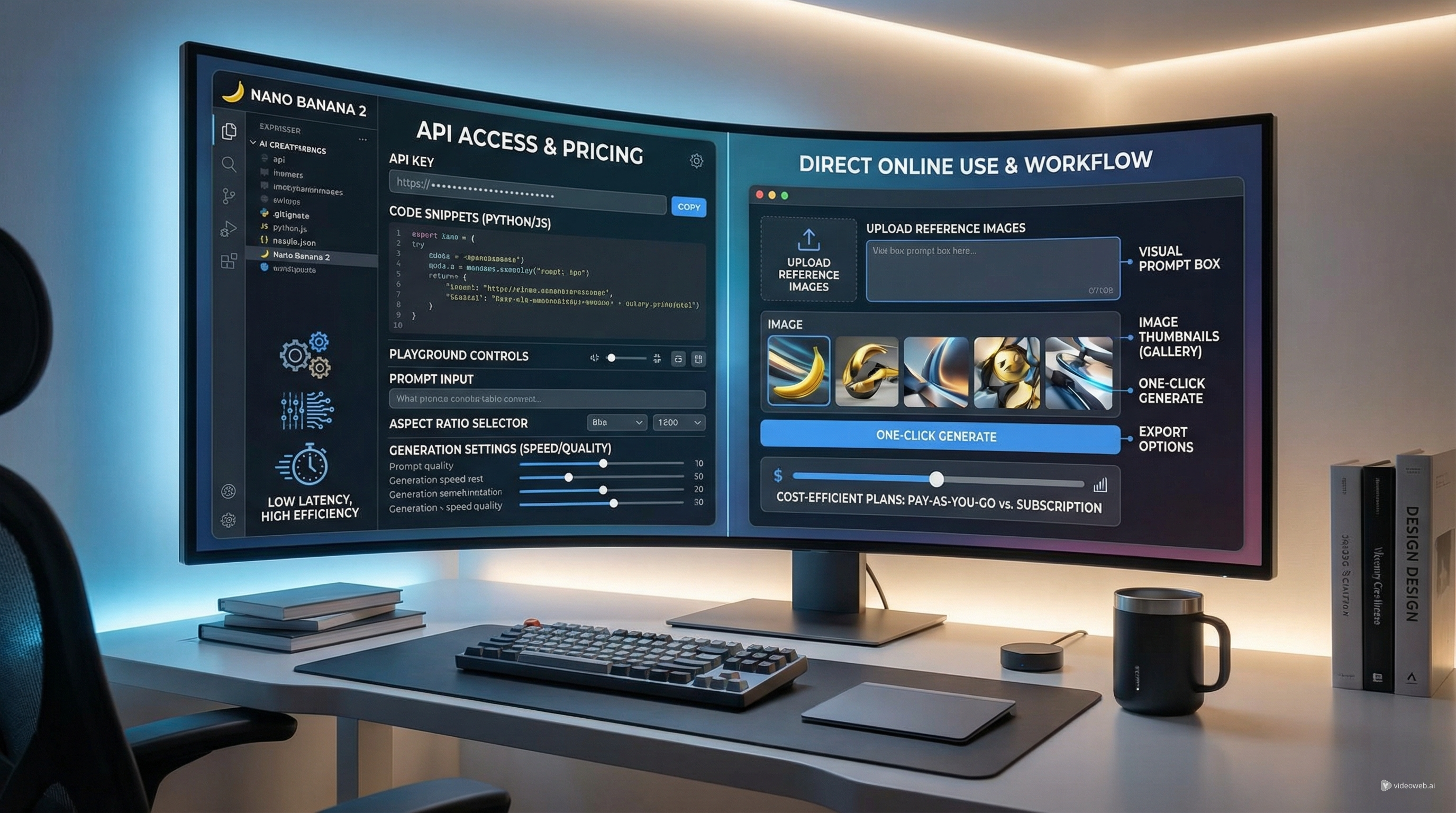
That is why the Google Nano Banana API angle matters. On Flaq AI, the model is presented less like a flashy one-off demo and more like a practical service: prompt input, aspect ratio selection, resolution controls, output generation, and documentation access all live in one place. That setup makes it easier to understand whether the model fits your workflow before you commit to deeper integration.
In simple terms, Nano Banana 2 is attractive for three reasons. First, it is fast enough for quick iteration. Second, it is framed as a more affordable option than a premium-tier alternative. Third, it appears designed for both direct generation and editing-related use cases rather than a narrow single-purpose workflow.
Why Flaq AI Is the Best Starting Point for API Users
For API-minded readers, Flaq AI has the clearest practical appeal. The platform does not force you to choose between reading docs and trying the model. You can do both from the same environment.
This matters more than it sounds. Many API articles over-focus on technical access and forget the user experience before integration. In reality, most teams want to do at least a small round of testing before they build around a model. They want to see how prompts behave, how fast generation feels, and whether the outputs are good enough for the intended use case.
That is where the Nano Banana 2 API on Flaq AI feels well-positioned. It supports a useful “try first, integrate second” workflow. You can test images in the playground, adjust ratios and prompt structure, and then move toward docs and API use when the model proves itself.
This is also why the platform works well for developers, internal tools teams, and creative operations groups. It is not only an API listing. It is also a validation environment.
Nano Banana 2 Price and What “Affordable” Really Means
One of the most searched questions around this model is cost. But instead of treating pricing as a single number, it is more helpful to think about it as a workflow issue.
The live Flaq page positions the Nano Banana 2 price as cost-effective rather than simply “cheap.” It highlights faster generation and lower relative cost compared with the Pro-tier option. That is useful because many teams do not care only about the price per image. They care about the cost of getting to a usable result.
If a model lets you test more prompts in less time, fix direction faster, and avoid using an overly heavy option for everyday tasks, then the effective value becomes stronger. That is the real lens for understanding the Nano Banana 2 API price. It is not just about whether one generation is inexpensive. It is about whether the whole creative loop becomes cheaper.
A simple way to frame it is this:
| Pricing Question | Practical Answer |
|---|---|
| Is Nano Banana 2 budget-friendly? | Yes, especially for fast iteration and higher-volume generation |
| Is it better than using a heavier model for everything? | Usually yes, if your work depends on speed and repeated testing |
| When should you move up to Pro? | When maximum polish, stronger reasoning, or premium commercial output matters more than throughput |
That makes Nano Banana 2 a strong fit for social content teams, ecommerce visuals, quick-turn campaign assets, internal creative tools, and any workflow where speed is part of the value.
Nano Banana 2 vs Nano Banana Pro
The comparison that matters most is not against every model on the market. It is against the more premium version in the same family.
The Nano Banana Pro API conversation matters because it helps readers understand what they are trading off. In practical terms, Nano Banana 2 is the better recommendation when speed and efficiency come first. Nano Banana Pro is the better recommendation when the output must feel more premium and the extra cost is justified.
Here is the clearest comparison:
| Model | Best For | Main Advantage | Main Trade-Off |
|---|---|---|---|
| Nano Banana 2 API | fast everyday generation and editing | speed and cost efficiency | slightly less premium than Pro |
| Nano Banana Pro API | polished commercial-quality output | stronger premium finish | slower and less cost-efficient for bulk workflows |
For most readers coming from a practical use-case mindset, Nano Banana 2 is easier to recommend first. It covers more everyday needs without pushing users into a premium-only workflow too early.
When HeyDream Is the Better Choice
Even if Flaq AI is the better recommendation for API access, it is not automatically the better choice for every user.
Some people do not want to think like developers. They want to open a page, upload images, test a prompt, and work visually. That is where HeyDream AI becomes a valuable equivalent.
HeyDream’s Nano Banana 2 AI page is useful for direct online generation, quick experimentation, and creator-friendly image workflows. It is also easier to recommend to people who are still validating ideas rather than building products.
This makes the split simple. Use Flaq when you want API access, integration potential, and a playground that leads into documentation. Use HeyDream when you want fast direct-use creation without the API mindset.
That recommendation becomes even stronger if you want to explore related image workflows on HeyDream, such as the AI Image Generator, Image to Image, Text to Image, Image to Prompt, and Nano Banana Prompt.
Final Verdict
If your goal is to find the best practical route into Nano Banana 2, the answer depends on how you plan to use it.
If you want a developer-friendly workflow with both live testing and integration potential, start with the Google Nano Banana API on Flaq AI. It gives you a cleaner bridge from experimentation to production.
If you want a simpler direct-use experience for fast image creation and editing, use HeyDream’s Nano Banana 2 AI instead.
For most API-focused readers, though, Flaq AI is the stronger first recommendation because it treats Nano Banana 2 as both a tool you can test and a service you can build on.
Other APIs to Try on Flaq AI
- Nano Banana 2 API
- Nano Banana Pro
- Seedream 4.5
- Qwen Image 2.0
- Wan 2.6
- Veo 3.1
- Seedance 1.5 Pro
- Kling 3.0
- Nano Banana AI
HeyDream Models and Pages Worth Exploring
- HeyDream AI
- Nano Banana 2 AI
- AI Image Generator
- Text to Image
- Image to Image
- Image to Prompt
- Nano Banana Prompt
Related Article
- Kling 3 API Guide: Standard vs Pro, Pricing, and How to Use It on Flaq AI
- Wan 2.7 API Insight 2026: Open-Source, API-Only, or Platform-First?
- HeyDream AI Image Generator Guide: Best Models for Text-to-Image and Image-to-Image
- Nano Banana 2 vs Qwen Image 2.0 vs Seedream 5.0: Which HeyDream Model Fits Your Workflow?
People Also Read
- How to Use the AI Music Video Generator: A Detailed Guide from Song to Video
- Nano Banana Pro on DreamMachine AI: A Practical Way to Create Better AI Images
- Nano Banana 2 vs Nano Banana Pro: What Changed and Which One Fits Your Workflow?
- How to Use Nano Banana 2 for AI Image Generation and Editing
- 4K in a Blink: Nano Banana 2 Brings Ultra-High-Resolution AI Images to Your Workflow
- Nano Banana 2 vs Seedream 5.0: A Practical Comparison Guide
- How to Use Sea Imagine AI’s Image Generator: A Beginner-Friendly Tutorial